How to Find Students as a Tutor: Where to Start
3 min read
Contents
Finding your first students can feel harder than teaching them. The good news is that you don’t need a big audience or a complicated marketing strategy to get started. You need a clear offer, a few places to promote it, and a little consistency.
1. Decide who you want to teach
Start with three simple questions:
- What subjects or skills can you teach confidently?
- Who can you help most: children, teenagers, university students, or adults?
- What can students expect to achieve with your lessons?
You don’t have to teach everyone. A clear focus makes it easier for the right students to find you.
2. Choose where to advertise your services
You don’t need to be everywhere. Start with one or two channels that suit your subject and location.
- Tutoring platforms. Create a profile on a specialist website where students actively look for tutors:
- Superprof — create a tutor listing and offer lessons online or in person. Check the local Superprof website for your country.
- Preply — apply to teach online. It’s especially well known for language lessons and also covers other subjects.
- Wyzant — a tutoring marketplace for the US, where students can find your profile or you can apply to posted tutoring jobs.
Each platform has its own eligibility rules, fees, and approval process, so check the details before signing up.
- Local communities. Parent groups, neighbourhood forums, and community pages can be useful for finding students nearby. Read the rules first: some allow service ads, while others prohibit them.
- Social media. Share useful tips, short explanations, or examples of how you teach. You don’t need to post every day. A few helpful, relevant posts can show potential students what working with you might be like.
- Word of mouth. Tell friends, former colleagues, and people you know that you’re accepting students. A personal recommendation can help a new tutor build trust.
3. Write an ad that answers the right questions
A good tutoring ad doesn’t need to sound impressive. It needs to be clear.
Include:
- The subject and the students you work with.
- Your experience, qualifications, or relevant strengths.
- Whether you teach online, in person, or both.
- What lessons help students work towards.
- Your location, availability, and price, if appropriate.
Be specific. “I help primary-school students build confidence in maths” tells families more than “Experienced and passionate tutor.”
4. See what works
Keep track of where enquiries come from, which messages get responses, and which students book a first lesson. If an ad brings no enquiries, try changing its headline, wording, or audience before abandoning the idea altogether.
Finding students often takes a few attempts. That doesn’t mean you’re doing it wrong; you’re learning what works for your subject and audience.
5. Make it easy for students to stay
Getting a new student is only part of the job. Clear communication, thoughtful lessons, and reliable scheduling help build lasting relationships.
As your student list grows, keeping track of lessons, payments, cancellations, and rescheduled sessions can become a job of its own. Tabula helps tutors keep their schedules, students, lessons, and payments organised in one place—so less time goes into administration and more can go into teaching.

Tabula
Schedule, students and payments in one place
You don’t need to become a marketing expert to find your first students. Start with what you can teach well, tell the right people about it, and keep going. One good connection can be the beginning of a steady tutoring practice.
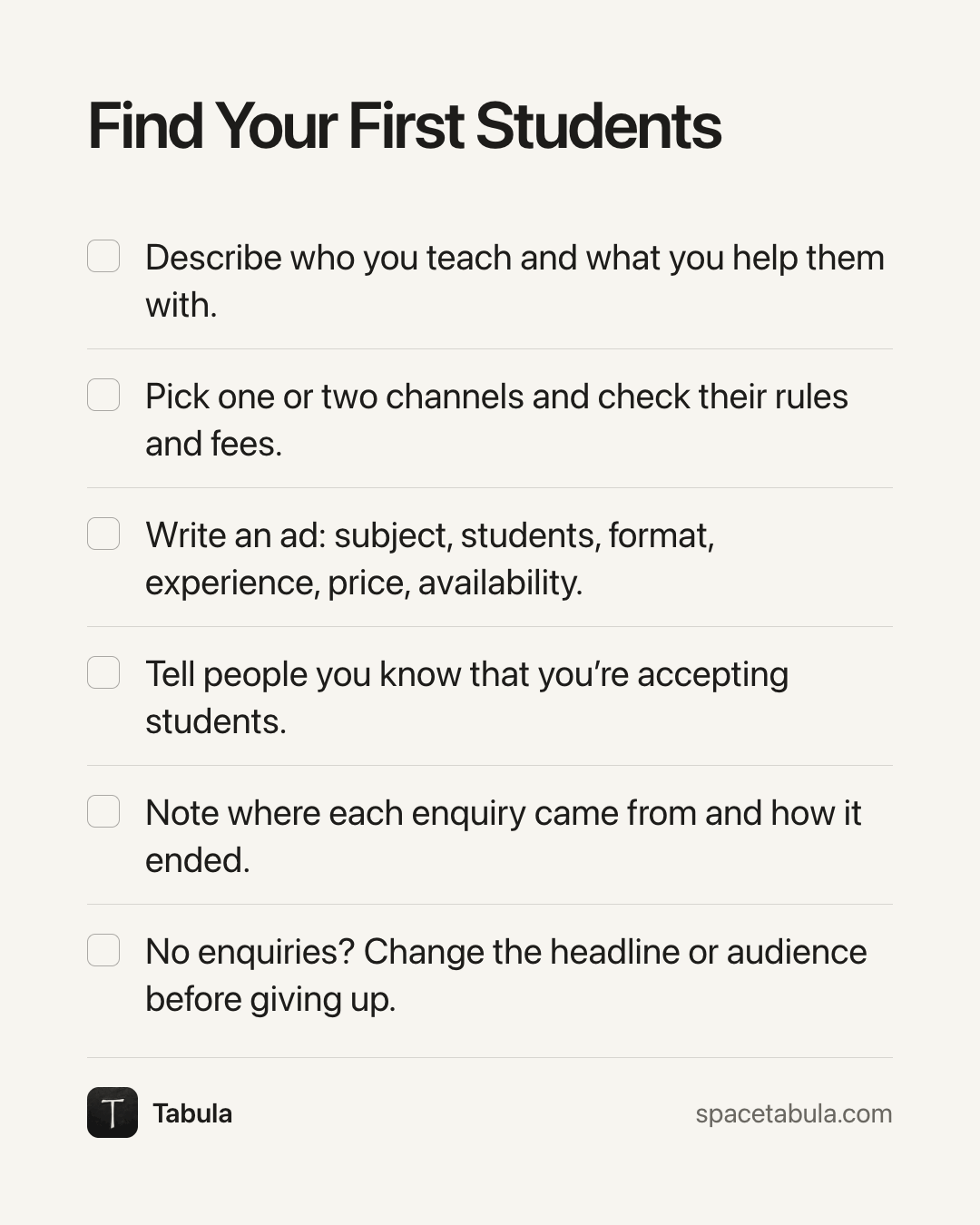
Find Your First Students
A short summary of this article: save it and tick off each step.
- Describe who you teach and what you help them with.
- Pick one or two channels and check their rules and fees.
- Write an ad: subject, students, format, experience, price, availability.
- Tell people you know that you’re accepting students.
- Note where each enquiry came from and how it ended.
- No enquiries? Change the headline or audience before giving up.
Tabula
spacetabula.com